
Data Integration for Maritime Transportation
Consolidate vessel tracking, IoT sensors, port systems, and cargo data into unified pipelines for fleet optimization and operational visibility.
Industry-Specific Outcomes
Fleet fuel consumption optimization from engine sensor data
Predictive maintenance alerts for marine equipment
Container and cargo tracking visibility
Port terminal throughput and berth optimization
AI-powered route planning with weather integration
Popular Connector Workflows
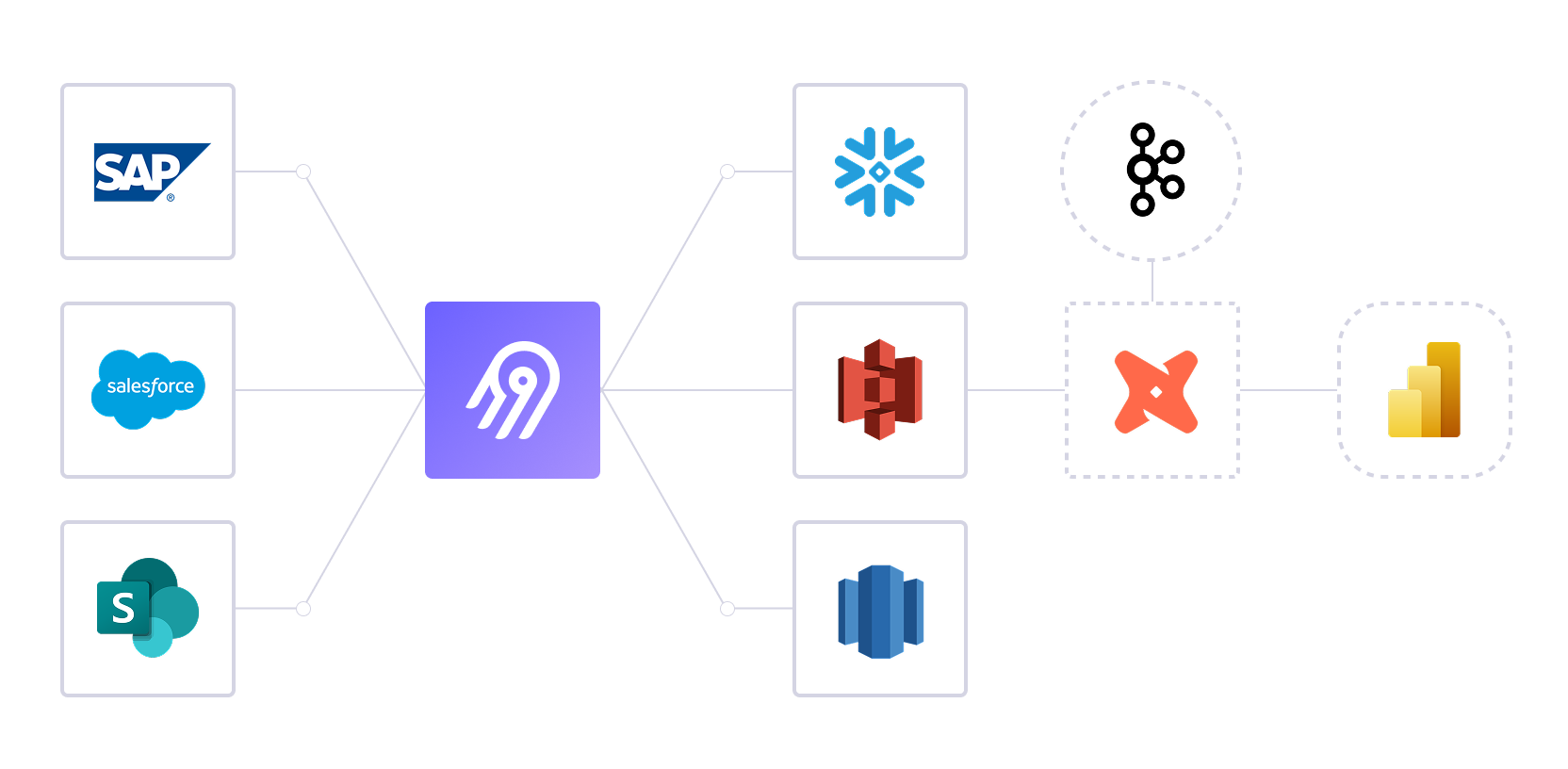
Maritime Data Pipeline Architecture
Vessel sensors and AIS feeds stream through Airbyte to cloud warehouses, powering fleet analytics and operational dashboards.
Without such an integrated 360-degree view of customer engagement data, it was challenging for internal product teams to reach the right customers at the right time through push notifications or email messages. With Airbyte, we were able to save up to 10% of the marketing budget. In addition, the savings obtained with Airbyte helps the company reinvest into the business to lead to a higher return on marketing investment.

Compliance Considerations
IMO cybersecurity guidelines for maritime data systems
International customs data exchange requirements
GDPR compliance for crew and passenger information
SOC 2 Type II certification for secure data handling
Recommended Connectors
See all connectorsSalesforce
CRM for customer and cargo management

Flexport
freight forwarding and shipping operations

ERP for fleet and operations management

QuickBooks
financial management and billing

Snowflake destination
data warehouse for analytics

BigQuery
centralized reporting and BI

Related Resources
IoT Data Integration
Supply Chain Data Integration
Real-Time Data Processing
How to sync Flexport to BigQuery

Unify Your Maritime Data Operations
Move faster with secure, compliant, and open-source data integration.